
Safe Online Casino UK: Licensing and Player Safety
 Available in GB
A practical look at licensing, verification, payments, encryption and game safety for players in Great Britain.

Table of Contents
- The UK Safety Framework Behind Licensed Online Casinos
- What a Safe Online Casino in the UK Should Look Like in 2026
- Licensed Casino Sites: How to Check the Operator
- Safe Real-Money Play: Verification, Funds and Withdrawals
- How to Choose a Safe and Reliable Online Casino
- Best Safe Casino Options by Player Priority
- Secure Casino Sites, Encryption and Crypto Payment Cautions
- Safe Casino Games and Online Slots
- Safe Deposit and Payment Methods for UK Players
- Choosing a Safe Online Casino App
The UK Safety Framework Behind Licensed Online Casinos
A safer casino in Great Britain is defined first by the framework behind it, not by a colourful homepage or a large bonus banner. The UK Gambling Commission regulates gambling in the United Kingdom, and an online casino serving consumers in Great Britain must hold a valid UK Gambling Commission licence to operate legally. That licence is the starting point for assessing safe UK online casinos, because it places the operator within a formal system of supervision.
This framework matters because it covers more than permission to offer games. It creates obligations around how an operator handles customers, money and complaints. The result is a clear distinction between licensed online casinos in the UK and sites that merely present themselves as trustworthy.
Licensing as the legal foundation
A UKGC licence is the legal basis for an online casino operating in Great Britain. It indicates that the operator has entered the regulatory system overseen by the UK Gambling Commission rather than operating outside it. The Commission regulates all forms of gambling in the United Kingdom, so online casino activity sits within the same broader structure as other regulated gambling services.
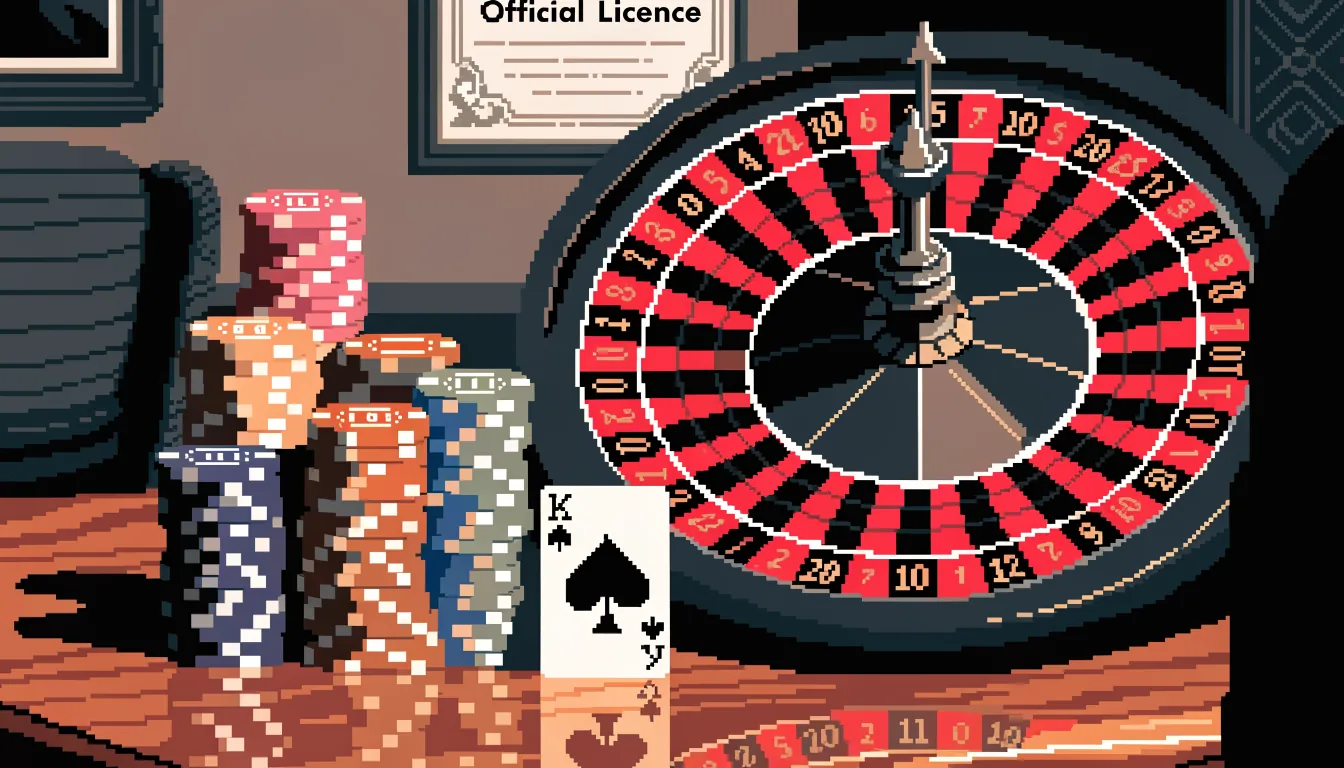
For you as a player, licensing provides a route to accountability. A casino operating under the UK framework is not simply making voluntary claims about safety. It is expected to meet regulatory duties connected with its gambling service. That does not turn every licensed operator into an ideal choice, but it gives you a stronger foundation than an unregulated site can offer.
The distinction is practical:
- licensed operators are subject to UK gambling regulation;
- player funds must be handled separately from operational funds;
- complaints must have access to an approved dispute-resolution route;
- the operator must accept the minimum legal gambling age of 18.
The licence is therefore not a decorative badge. It is the mechanism that connects the casino to enforceable standards.
What player-fund protection really means
One of the most important parts of the UK safety framework concerns money held for players. UKGC-licensed casinos must keep player funds in separate, segregated accounts from their operational funds. This separation is designed to prevent customer balances from being mixed directly with the money used to run the business.
Segregation is important, but it should not be confused with a universal guarantee. Player funds at UKGC-licensed casinos can be classified as not protected, medium protection or high protection. Only high protection guarantees the funds if the operator becomes insolvent.

High fund protection involves holding player funds in independent trust accounts. That arrangement is stronger than simple separation because the money is placed within an independent trust structure. When comparing safe casino sites in the UK, the protection category is therefore a material point, not a footnote buried in the terms.
A careful reading of the framework leads to a straightforward conclusion: a UKGC licence establishes regulatory oversight, while the fund-protection classification explains what may happen to player balances if the business fails. Those are related questions, but they are not the same question.
Complaints and independent redress
Safety also depends on what happens when something goes wrong. A regulated casino must provide access to Alternative Dispute Resolution, known as ADR, for player complaints. ADR gives customers an independent route for disputes that cannot be resolved directly with the operator.
This does not mean every complaint will be decided in the player’s favour. It means the complaint is not limited to an internal customer-support process. The operator must provide access to a recognised dispute-resolution mechanism, creating a further layer of accountability for safe online casinos for UK players.
A sensible framework is therefore wider than “the site pays out”. It asks whether there is a documented route for challenging a decision, whether the operator is connected to ADR and whether the player can escalate a dispute beyond the casino itself. Without that route, a customer may have little practical leverage when a disagreement concerns an account or balance.
The role of age protection
The minimum age for online gambling in the UK is 18. This is a basic rule, but it is also part of the safety structure that separates regulated casino services from casual or unaccountable websites.
Age protection is not an optional feature added to an otherwise complete casino. It is part of the legal conditions under which gambling is offered. A site that treats age controls as secondary is not matching the framework expected of licensed operators.
That principle also explains why the safest UK casino sites should be assessed as regulated financial and gambling services, not merely as entertainment platforms. The operator’s legal responsibilities begin before a customer plays and continue through the handling of funds and disputes.
Safety Essentials
- A valid UKGC licence is the mandatory foundation for safe gambling.
- Player funds must be kept in separate, segregated accounts.
- Independent ADR access is required for dispute resolution.
- Age protection must be strictly enforced at 18 years old.
A framework, not a guarantee
The UK system gives players useful safeguards, but it does not remove the need for careful judgement. A valid licence does not mean that every term is equally generous, that every dispute will be simple or that insolvency protection is automatically high. The framework tells you what type of oversight exists; the individual operator’s conditions determine how those protections apply.
For that reason, the phrase “best safe online casinos UK” has no single answer at this stage. Safety has measurable components: legal operation, segregated player funds, the stated protection level, ADR access and compliance with the 18-year minimum age. Different players may give these criteria different weight, but the structure comes first.
Regulation is the floor. Not the finish.
What a Safe Online Casino in the UK Should Look Like in 2026
A safe online casino in the UK is not defined by bright design, a large game lobby or an attractive sign-up offer. Safety is a set of checks you can verify before depositing: a relevant UK Gambling Commission licence, clear terms, completed identity controls, responsible gambling tools and independently tested games.
That gives you a practical benchmark for comparing safe and reliable online casinos UK players can use, rather than relying on branding or promises.

Start with a genuine UKGC licence
For a casino serving customers in Great Britain, licensing is the first filter. A legitimate operator should appear on the UK Gambling Commission’s public register, which records active, inactive and white label licences. The listed operator, licence status and domain should align with the casino website you are visiting.
This distinction matters because a familiar-looking brand is not proof of a licensed operation. A safe casino UK assessment begins with the regulator’s record, not with a logo placed in a footer.
The register is a verification point, not a decorative badge.
A white-label arrangement also deserves attention. The website name may differ from the legal entity responsible for the gambling service, so the licence information should make that relationship understandable. If the operator details are difficult to locate or do not match the registered information, the site fails the basic transparency test.
Look for rules you can actually read
A secure online casino UK player can assess should explain its important conditions before money is committed. The terms should clearly cover:
- bonuses and sign-up perks;
- wagering requirements;
- withdrawal policies;
- verification requirements;
- account restrictions and relevant eligibility conditions.
The point is not to choose the most generous promotion. It is to understand what happens to your balance, winnings and withdrawal request under the stated rules. A bonus that cannot be assessed without searching through vague or incomplete wording is a poor safety signal, even if the headline offer looks appealing.
Transparent terms should also make it possible to identify which conditions apply to real-money play and which apply only to promotional funds. Read those sections before accepting an offer. A safe real-money casino UK comparison should treat clarity as a requirement, not an optional convenience.
Expect identity checks before gambling
UKGC-licensed casinos must verify a player’s age and identity through KYC checks before allowing gambling. This is part of the entry standard for a safe casino online UK customers can use, rather than an unusual obstacle added by a cautious website.
You should therefore expect the operator to request information needed for age and identity verification. The account should not be treated as fully ready for gambling merely because registration has been completed. If a site suggests that identity checks can be bypassed, that conflicts with the expected UKGC framework.
This also changes how you should judge speed. A casino that pauses an account to complete required checks is not automatically unreliable. The relevant question is whether the process is explained clearly and handled consistently with the published terms.
Check the responsible gambling controls
A safer operator gives you practical control over your account. UKGC-licensed casinos must provide responsible gambling tools including deposit limits, session limits, loss limits and self-exclusion options.
These tools should be visible and usable, not buried so deeply that finding them becomes a separate research project. Before depositing, check where the controls are located and whether the available settings match the way you intend to manage play.

Deposit limits can restrict how much you add. Session limits can help define how long you play. Loss limits focus on the amount lost, while self-exclusion provides a stronger break from gambling. No tool turns gambling into a risk-free activity, but the absence of these controls is a clear reason to reject a site.
For anyone asking, “are online casinos safe in the UK?”, the honest answer is conditional: a licensed casino has a defined safety framework, but your own limits and decisions still matter.
Confirm that games are independently tested
Game safety concerns fairness as well as account security. Casino games at UKGC-licensed sites must use Random Number Generators, or RNGs, and be tested for randomness by independent agencies. Regular fairness audits may involve testing bodies such as eCOGRA, iTech Labs, TST or GLI.
This does not mean a particular result is predictable. RNG testing addresses whether outcomes are generated randomly and whether the game operates as described. It is a stronger benchmark than relying on a provider’s marketing language alone.
When comparing safe mobile casinos UK players access through a phone, apply the same standard. A mobile layout is only an access channel; it does not replace licensing, KYC, responsible gambling controls or game testing.
A usable 2026 benchmark
For a safe online casino UK 2026 assessment, use this sequence:
- Confirm the operator and domain on the UK Gambling Commission public register.
- Read the bonus, withdrawal and verification terms before depositing.
- Expect age and identity checks before gambling is permitted.
- Locate deposit, session, loss and self-exclusion controls.
- Check that games use RNGs and are subject to independent fairness testing.
If a site passes these checks, it meets the practical definition of a safer UKGC casino. If one of the foundations is missing, polished design and extensive game choice do not repair the gap.
Licensed Casino Sites: How to Check the Operator
A polished website is not proof that you are looking at one of the licensed casino sites UK players can legally use. The decisive check is the operator’s UK Gambling Commission (UKGC) licence. Online casinos serving consumers in Great Britain must hold a valid UKGC licence, regardless of where the business itself is based.
That makes the regulator’s public register more useful than a badge, review score, or marketing claim. Treat the register as the starting point for checking safe gambling sites UK players can access legally.
Check the operator, not just the brand
A casino brand and the legal operator behind it are not always presented with equal prominence. Find the operator’s legal name and, where shown, its licence number. Then compare those details with the UKGC public register.
The register includes active, inactive, and white label licences, so finding a name there is not enough on its own. Check the licence status and confirm that the domain listed by the Commission matches the website you are visiting. A similar name or a familiar logo does not establish that the site is authorised.
Use this sequence:
- Locate the operator’s legal details on the casino website.
- Search for the operator or licence number in the UKGC public register.
- Confirm that the licence is active.
- Match the registered domain with the casino’s actual web address.
- Stop if the name, status, or domain does not correspond.
That final comparison matters. A company can appear in the register while the particular website in front of you belongs to a different operation.
Why licence status matters
An inactive licence should not be treated as a minor administrative detail. The requirement is a valid UKGC licence for legal online casino operation in Great Britain. If the register does not show an active licence connected with the domain, the site has not passed the basic verification test.
This is also why “licensed” text in a footer carries limited weight. The claim may refer to a corporate entity, an old website, or a different brand. The public register gives you a way to test the claim against the operator and domain together. Less glamour, more evidence.
The same method applies when you are comparing safe online gambling sites UK users may encounter through reviews, advertising, or direct recommendations. A review can help you notice a brand; it cannot replace the register check.
- Verify the operator on the UKGC public register.
- Check that the domain matches the registered licence.
- Confirm the licence status is active.
- Rely solely on brand logos or footer badges.
- Accept sites that lack a clear dispute resolution route.
- Ignore inconsistencies between the brand and the legal entity.
New and white-label casinos need closer attention
New operations deserve a careful check because a short operating history provides less independent context. Do not infer legitimacy from a modern design, a large games menu, or an introductory promotion. Establish the operator, confirm its active UKGC status, and match the domain before considering the site further.
White-label arrangements require the same discipline. The register specifically includes white label licences, while the public-facing brand may differ from the legal operator named in the site’s terms. Read the footer, licence page, and terms and conditions together rather than relying on the brand name alone.
This is particularly relevant when looking for safe slot sites UK players can use or a safe live casino UK experience. The type of game does not change the licensing test. Slots, live tables, and casino promotions still need to sit behind the appropriate active UKGC authorisation.
Read the site’s legal information
Once the licence and domain match, inspect the terms and conditions. UKGC-licensed casinos must provide transparent information about bonuses, withdrawal policies, and verification requirements. You do not need to accept an offer before understanding its conditions.
Also check whether the site explains its complaint route and identifies an Alternative Dispute Resolution provider. UKGC-licensed casinos must provide access to ADR services for player complaints. Keep those details available before depositing; resolving a dispute is easier when the route is visible.

Finally, expect age and identity verification through KYC checks before gambling is allowed. A site that treats verification as optional or unexplained should not be treated as a safe online casino review recommendation, whatever its promotional claims. The licence check comes first; the rest confirms whether the operator behaves consistently with it.
Safe Real-Money Play: Verification, Funds and Withdrawals
Real-money play at a UKGC casino depends on more than a successful registration. Before you can gamble, the operator must verify your age and identity through Know Your Customer (KYC) checks. This is a basic condition of lawful access, not an optional feature added to make an account look safer.
The process may involve confirming personal details and providing identity evidence. A specialist industry review reports that players can also be asked for additional documents when their gambling activity triggers further verification. The practical point is simple: a withdrawal request can lead to further checks even when the account was opened without difficulty. Keep your details consistent and use documents that clearly support them.
What happens to your casino balance?
A UKGC-licensed casino must keep player funds in separate, segregated accounts from its operational money. This separation is important because the balance shown in your account is not the operator’s working capital. It should be held apart from the funds used to run the business.
Segregation, however, is not the same as a guarantee that every balance will be returned if the operator becomes insolvent. UKGC-licensed casinos classify player-fund protection as:
- Not protected
- Medium protection
- High protection
Only high protection guarantees player funds if the operator becomes insolvent. High protection involves holding those funds in independent trust accounts.
That distinction matters when you assess a safe online casino for real-money use. A licence and segregated accounts establish important safeguards, but they do not automatically mean that your balance has the highest level of protection. Read the operator’s player-funds information rather than treating a general safety statement as a promise of repayment.
Withdrawals and verification
The safest approach to a withdrawal is to treat it as part of the account-verification process, not as a separate transaction with no checks attached. The casino may need to confirm who you are before releasing funds, and further documentation may be requested where additional verification is triggered.
Check the relevant account terms before depositing real money. Look for clear explanations of:
- the KYC information required before gambling;
- circumstances that can lead to further document requests;
- how the operator describes the protection of player funds;
- what happens to balances if the business becomes insolvent.
This is also where a safe casino welcome bonus UK offer needs careful reading. A bonus can affect the conditions for withdrawing associated funds, so examine its terms before accepting it. Pay particular attention to wagering requirements, eligibility rules and withdrawal conditions. The attractive headline is not the complete transaction.
Your own records also matter. Use an account in your name, retain relevant payment and identity documentation, and avoid opening confusion around mismatched personal details. These steps do not bypass KYC; they make the information supplied to the casino easier to verify.
For safe online casino real money play in Great Britain, the useful test is therefore three-part: identity checks before gambling, clearly described handling of player funds, and an explicit protection classification. The wording matters. “Funds are segregated” tells you how money is held; it does not tell you that insolvency losses are guaranteed. That is the difference between a safety control and a safety guarantee.
How to Choose a Safe and Reliable Online Casino
Choosing a safe online casino is easier when you treat it as a sequence of checks rather than a popularity contest. A polished homepage proves very little. Use the same order each time: confirm the licence, inspect the terms, check the complaint route, and then decide whether the operator’s controls fit your own limits.
1. Start with the licence
The first question is whether the casino is authorised for online gambling in Great Britain. Check the operator in the UK Gambling Commission’s public register, rather than relying on a badge, directory listing or statement on the casino’s own website.
Verification Checklist
- Confirm the operator on the UKGC public register.
- Verify the domain matches the licence holder.
- Review all bonus and withdrawal terms.
- Locate responsible gambling control tools.
The register includes active, inactive and white-label licences, so read the entry carefully. Confirm that the listed operator corresponds with the casino you intend to use and that the relevant domain is covered. This is the practical answer to how to check if an online casino is safe: verify the business behind the website, not just the website’s appearance.
If the details do not match, stop there. No bonus is worth treating an unclear licence as a minor technicality.
2. Read the terms before accepting an offer
A reliable casino should present clear terms and conditions covering bonuses, withdrawals and verification requirements. Read these sections before depositing, especially where an offer includes wagering requirements, expiry conditions or restrictions on eligible games.
Do not judge a bonus by its headline value alone. The useful comparison is the complete set of conditions: what must be done, which games count, how withdrawals are handled and what verification may be required. If important terms are difficult to locate or written ambiguously, that is a reason to remove the site from your shortlist.
The same rule applies to withdrawal policies. Check whether the casino explains its process clearly and whether the conditions attached to withdrawing bonus-related funds are easy to understand.
3. Check the operator’s verification information
Before choosing a casino, find the page explaining identity and account verification. A safe operator should state what information may be required and when checks can affect account use or withdrawals.
This does not mean choosing the site with the fewest checks. Clear requirements are more useful than vague promises of effortless access. If the casino gives no meaningful explanation of its verification process, you cannot properly assess how it handles account security or payment requests.
4. Match the controls to your own limits
Responsible gambling tools are part of the selection test, not decorative footer links. Look for deposit limits, session limits, loss limits and self-exclusion options. Choose a casino only if its available controls support the way you intend to manage your gambling.
If you need firm boundaries, prioritise an operator where those tools are easy to find and use. A casino can meet formal requirements and still be a poor personal fit if its controls are difficult to locate or do not match your needs. The safest choice is the one that makes your limits practical, not merely possible.
5. Confirm the complaint route
Finally, check how disputes are handled. UKGC-licensed casinos must provide access to an Alternative Dispute Resolution service for player complaints. Look for the ADR information and the casino’s internal complaints procedure before registering.
This gives you a defined route if communication breaks down. It does not guarantee that every dispute will end in your favour, but it is a meaningful reliability check.
A simple decision rule works well: no verified licence, no account; unclear terms, no deposit; unsuitable controls, no play. That is how to choose a safe and trusted online casino without confusing advertising with evidence.
Best Safe Casino Options by Player Priority
This page highlights key facts to help you assess licensed online casino options in the UK for 2026. Use the listed licence, bonus, payout speed and minimum deposit details as a concise starting point for your review.
License: UKGC Operator Licence · Bonus: £100 bonus · Payout speed: Within 24 hours · Min. deposit: £10 LeoVegas holds a UKGC Operator Licence and offers a £100 bonus. Its stated payout speed is within 24 hours, with a £10 minimum deposit.
License: UKGC Operator Licence · Bonus: £50 bonus · Payout speed: Within 48 hours · Min. deposit: £10 Platinum Gaming Limited holds a UKGC Operator Licence and offers a £50 bonus. Payouts are stated as being within 48 hours, with a £10 minimum deposit.
License: UKGC Operator Licence · Bonus: £100 bonus · Payout speed: Within 24 hours · Min. deposit: £10 ProgressPlay Limited holds a UKGC Operator Licence and offers a £100 bonus. Its stated payout speed is within 24 hours, with a £10 minimum deposit.
License: UKGC Operator Licence · Bonus: £100 bonus · Payout speed: Within 24 hours · Min. deposit: £10 Genesis Global Limited holds a UKGC Operator Licence and offers a £100 bonus. Payouts are stated as being within 24 hours, with a £10 minimum deposit.
License: UKGC Operator Licence · Bonus: £20 bonus · Payout speed: Within 48 hours · Min. deposit: £10 Silverbond Enterprises holds a UKGC Operator Licence and offers a £20 bonus. Its stated payout speed is within 48 hours, with a £10 minimum deposit.
License: UKGC Operator Licence · Bonus: £200 welcome bonus · Payout speed: Within 48 hours · Min. deposit: £10 32Red holds a UKGC Operator Licence and offers a £200 welcome bonus. Payouts are stated as being within 48 hours, with a £10 minimum deposit.
There is no universal winner among safe casino sites in the UK. The stronger choice depends on the criterion you care about most: clear bonus conditions, verified legitimacy, or practical player protection. A useful comparison therefore ranks priorities, not brands.
Best for a transparent bonus
Choose the casino with the clearest bonus page, not the largest advertised figure. The terms should state the wagering requirements, eligible games, contribution rules, expiry conditions, withdrawal restrictions and any maximum cash-out rule before you claim the offer.
A specialist industry review identifies 10x or lower as preferable for a fair casino bonus. The same type of source reports that the UK Gambling Commission has capped UK casino bonus wagering requirements at 10x. Treat that information as source-specific guidance, then confirm the exact conditions on the operator’s own terms page. A bonus is not safe merely because its headline sounds generous. Small print remains remarkably undefeated.
Best for legitimate operation
For a legit online casino in Great Britain, the decisive criterion is a valid UK Gambling Commission licence. Check the operator’s name or licence number against the Commission’s public register, then confirm that the domain you intend to use is the one listed there.
The register includes active, inactive and white-label licences, so the presence of a name alone is not enough. An inactive entry does not establish that the current site may legally offer online gambling. A white-label arrangement also calls for careful matching of the trading brand, licence holder and listed domain.
This is the priority for anyone comparing the best safe online casino UK options without relying on advertising claims. If the register details do not match, remove the site from consideration.
Best for player protection
Here, compare the controls available in the account area and the clarity of the operator’s support information. A UKGC casino must provide responsible gambling tools, including deposit limits, session limits, loss limits and self-exclusion options. It must also participate in Gamstop, which allows users to block access to licensed gambling sites.

Look for these tools before depositing, not after a difficult session. Check whether the site explains how to set or change limits, where self-exclusion is activated, and how complaints can be escalated through an approved Alternative Dispute Resolution provider.
How to apply the priorities
Use a simple shortlist:
- Remove any casino whose licence status or domain cannot be matched on the UK Gambling Commission register.
- Compare bonus terms line by line, giving preference to clearly stated wagering requirements.
- Check responsible gambling tools and Gamstop participation before assessing promotions.
- Keep only sites that satisfy all three priorities.
That approach produces a more defensible list of safe casino bonuses UK players can consider, without pretending that one operator is best for every need. Mobile access does not change the standard: a safe mobile casino must still meet the same licensing and protection criteria as its website.
Secure Casino Sites, Encryption and Crypto Payment Cautions
A secure online casino in the UK needs more than a polished interface. The useful question is whether the site protects your account, handles payment data responsibly and can demonstrate that its games have been checked independently. Security is a set of controls, not a logo placed beside the registration button.
Account and payment security
Secure casino sites UK players use should protect personal and financial information with SSL encryption. This helps secure data while it moves between your device and the casino, reducing the risk of interception during login, registration and payment activity. Encryption does not make an unlicensed operator trustworthy, but its absence is an immediate warning sign.
Personal information should also be handled under UK GDPR and the Data Protection Act 2018. Look for a clear privacy policy explaining what information is collected, why it is needed and how it is stored. A site that asks for sensitive details but gives no meaningful explanation of data handling offers poor transparency, whatever its payment branding suggests.
Payment security also includes the methods a casino accepts. In the UK, credit cards are prohibited for gambling purposes. Visa Debit and Mastercard-issued debit cards are allowed. That distinction matters: a payment page can look familiar while still using a method that is not permitted for gambling.
Payment Caution
Attention Credit cards are prohibited for gambling purposes in the UK; only debit cards from Visa or Mastercard are permitted.
Why crypto does not prove safety
A safe crypto casino UK search should be treated carefully. Cryptocurrency availability says something about payment choice, not about licensing, encryption, game fairness or complaint handling. Digital-asset transactions may appeal to players who value an alternative payment route, but they do not replace the checks applied to any other casino account.
Before considering crypto, assess the operator’s security controls first. Confirm that the website protects data with SSL encryption, that its privacy information is clear and that its games use independently tested Random Number Generators (RNGs). If those basics are missing, crypto is not a safety feature. It is merely another way to transfer value.
Independent testing matters
UKGC-licensed casinos must use RNG-based games and have them tested for randomness by independent agencies. Regular game-fairness audits may be conducted by bodies such as eCOGRA, iTech Labs, TST and GLI. These checks address whether game outcomes are generated randomly, rather than relying on the casino’s own claim.
That does not predict a winning result. It verifies the integrity of the mechanism. Keep the distinction clear.
For secure casino payments UK players should also review the site’s security information before entering financial details. SSL, lawful data handling and independent testing work together: encryption protects the connection, privacy rules govern personal data, and audits examine game randomness. None is a substitute for the others.
Safe Casino Games and Online Slots
Safe online casino games in the UK are defined by how their outcomes are generated and checked, not by attractive graphics or a familiar title. At a UKGC casino, games and slots must use a Random Number Generator (RNG), so each result is produced by a random process rather than selected manually to favour a particular player or session.
That does not make a game predictable or profitable. It makes the outcome subject to a defined technical standard. A losing spin is still a losing spin; the relevant question is whether the game operates fairly and whether its randomness has been independently tested.
What to check in online slots
When choosing safe online slot games in the UK, look for clear information about the game’s testing and provider. A legitimate casino should make it possible to identify the title and understand that its RNG has been assessed for randomness. Game information should not be replaced by vague claims such as “guaranteed wins” or “secret strategies”. Those are marketing fumes, not safety evidence.
Independent testing agencies, including eCOGRA, iTech Labs, TST and GLI, audit game fairness for UKGC-licensed casinos. Their role is separate from the casino’s commercial interests. This separation matters: a casino can publish a game, but an independent testing body assesses whether its random outcomes meet the required standard.
A useful comparison framework is:
- RNG use: the game must generate outcomes through a Random Number Generator.
- Independent testing: fairness and randomness must be audited by an independent agency.
- Clear game information: the title should identify the game and its provider without hiding essential details.
- No outcome promises: safe games do not claim that a particular pattern, timing or betting sequence can force a result.
The same principle applies to slots, table games and other casino formats. A polished interface is not proof of integrity. Independent verification is the stronger criterion.
Responsible gambling tools also belong around the game experience. UKGC-licensed casinos must provide deposit limits, session limits, loss limits and self-exclusion options. These controls do not alter RNG results, but they help you decide how long and how much to play before opening a game. Fair outcomes, sensible boundaries.
Safe Deposit and Payment Methods for UK Players
A payment method is safe only when its UK rules and practical limits are clear. For deposits at a UKGC casino, start by checking which methods are accepted, whether the account holder’s name must match the payment account, and how the same method handles withdrawals. A familiar logo is not a substitute for readable terms.
Debit cards
Credit card gambling is prohibited in the UK. Visa Debit and Mastercard-issued debit cards are allowed for casino transactions, making them a straightforward option for deposits. Before confirming a payment, check the cashier page for any minimum or maximum set by the operator and keep the transaction record.
Debit-card deposits are typically instant at UKGC-licensed casinos. Withdrawals are different: debit-card withdrawals typically take one to five business days. The casino may also return funds to the original payment route rather than letting you choose a separate destination.
E-wallets
PayPal, Skrill and Neteller can be useful where you want a separate payment balance instead of sharing card details with the casino. Deposits via e-wallets are typically instant. After approval, e-wallet withdrawals are processed within 15 minutes to 24 hours.
That timing begins after the withdrawal is approved, not necessarily when you click “withdraw”. Read the cashier terms before depositing, particularly if the method supports deposits but has restrictions on withdrawals.
Prepaid cards
PaysafeCard supports deposits but does not support withdrawals. It can therefore suit a controlled deposit budget, but you need another approved method to receive casino funds. A profile of payment services states that unregistered PaysafeCard users have a £40 spending cap, while registered users have a £1,000 limit; treat those figures as source-specific information and confirm the current terms before relying on them.
Bank transfers and Google Pay
Bank transfers are suitable when you do not need an instant cash-out. Withdrawals generally take three to five business days. Confirm the bank details carefully, because a transfer cannot be treated like a reversible card payment.
Google Pay may be available for deposits, but a payment-method review reports that it does not support online casino withdrawals in the UK at the time of writing. Check the operator’s cashier before using it. The safest choice is the method whose deposit route, withdrawal route and processing time are all stated plainly.
Choosing a Safe Online Casino App
A casino app is an access channel, not a separate safety standard. The same checks that apply to a website should apply when you use an app on a phone or tablet. A polished interface proves very little. A logo can be copied; licensing cannot.
Check the operator behind the app
Before signing in, confirm that the app is published by the same operator named on the casino website and in its UK Gambling Commission licence details. Use the operator’s official website to reach the app listing rather than relying on an advertisement or an unfamiliar download link. The app should identify the licensed business clearly, with matching branding and account terms.
If the publisher name, domain, or operator information does not match, stop there. Convenience is not a licence.
Apply the same account checks
A safe online casino app in the UK should use the same account controls as the operator’s website. You should be able to access the casino’s terms, verification information, and responsible gambling settings without being pushed into a less controlled mobile experience.
Look for practical access to:
- deposit limits;
- session limits;
- loss limits;
- self-exclusion options;
- account and gambling history;
- the operator’s complaints route.
These controls should work across the account, not only inside one device. Changing from a browser to an app should not reset your limits or alter your exclusion status.
Confirm Gamstop and payment consistency
UKGC-licensed casinos must be part of Gamstop, which allows users to block access to all licensed gambling sites. An app must not be presented as a workaround for that protection. If Gamstop has restricted your access, downloading a mobile application should not change the position.
Payment handling also deserves the same scrutiny as on the website. Use only the payment options shown by the licensed operator, check the transaction terms before depositing, and avoid unofficial app versions that request payment details outside the casino’s normal account process. The safest app is simply the licensed operator’s website experience with a mobile interface—not a shortcut around its safeguards.
What should players check when choosing a safe UK casino?
Check that the casino holds a valid UK Gambling Commission licence, keeps player funds separate, states its fund-protection level, provides ADR access, verifies that players are at least 18, and offers responsible-gambling tools.
What payment methods do the best online casino sites offer?
UK casino sites commonly support debit cards, e-wallets such as PayPal, Skrill and Neteller, bank transfers, and prepaid cards such as PaysafeCard. Debit cards, e-wallets and credit cards are typically listed for instant deposits, while withdrawal times depend on the method.
Does the ban cover Visa and Mastercard?
No, the UK ban covers credit cards used for gambling, while Visa Debit and Mastercard-issued debit cards are allowed.
What is GAMSTOP?
GamStop is the UK self-exclusion system that can block you from all licensed gambling sites for a period from six months to five years.
Created by the ”Casinouk Games Info” editorial team.